You’ve decided to do a triathlon.
Excellent.
You now have three sports to train for instead of one.
Swimming wants your attention. Cycling wants your weekends. Running would like to know why you suddenly disappeared.
And then comes the inevitable question:
“Do I actually need a triathlon coach?”
The short answer is no, you don’t necessarily need one.
It is absolutely possible to train for a triathlon without a coach, particularly if you’re tackling a beginner-friendly event, have some experience in one or more of the three disciplines, and are willing to learn how to structure your training.
But there’s a catch.
Triathlon training is not simply running training with a swim and bike attached.
You’re preparing your body for three different disciplines, learning how they fit together, managing recovery and eventually figuring out the mysterious art of getting from swimming to cycling to running without looking like your body has forgotten how legs work.
So yes, you can self-coach.
But you need a plan.
What Does Training for a Triathlon Actually Involve?
A triathlon combines swimming, cycling and running, which means your training has to account for all three.
That sounds obvious.
What’s less obvious is how much planning goes into making them work together.
You need to develop swimming technique and endurance. You need enough cycling fitness to handle the bike leg. You need running fitness without accumulating so much fatigue that your other sessions start suffering.
Then there are transitions, pacing, recovery, strength training, nutrition and race-day preparation.
Suddenly, that innocent little race on your calendar has become a surprisingly complicated group project.
And all three sports have different demands.
A strong runner cannot simply assume they can jump into triathlon training and wing the swim.
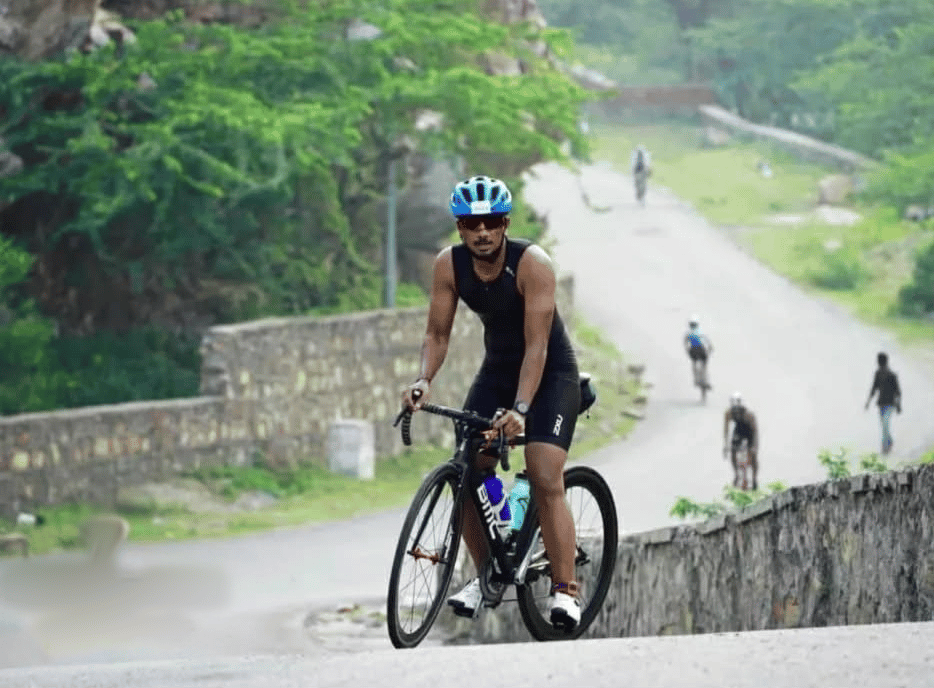
Likewise, someone who can comfortably cycle for three hours still needs to prepare their body for running afterwards.
That is why structure matters.
So, Can You Really Train Without a Coach?
Yes.
Many recreational athletes successfully train themselves by following a structured triathlon training plan, learning the basics of endurance training and gradually building their fitness.
Self-coaching can work particularly well if you enjoy researching training, tracking your sessions and figuring out what works for you.
It can also be a good option if you already have experience in endurance sports.
But there is a difference between training without a coach and training without a plan.
The first can work.
The second can get messy very quickly.
If every Monday starts with “What should I do today?” and every Sunday becomes “Maybe I should cycle for four hours because I haven't trained enough,” your training probably needs a little more structure.
Start With the Triathlon You Actually Want to Do
Before planning your training, figure out the race.
A beginner-friendly sprint triathlon is a very different project from a longer-distance event.
Look at the swim distance, bike distance and run distance.
Then consider the course.
Is the swim in a pool, lake or sea?
Is the cycling route flat or hilly?
Is the run mostly road, trail or a combination?
What are the expected conditions?
These details matter because your training should prepare you for the race you’re actually going to face.
There’s little point becoming incredibly comfortable swimming 50 metres at a time in a pool if your race involves an open-water swim and you’ve never practised one.
Your training plan should eventually look a little like your race.
The Swim Is Usually the Discipline You Shouldn’t Ignore
If you’re already a strong swimmer, great.
If you’re not, this deserves serious attention.
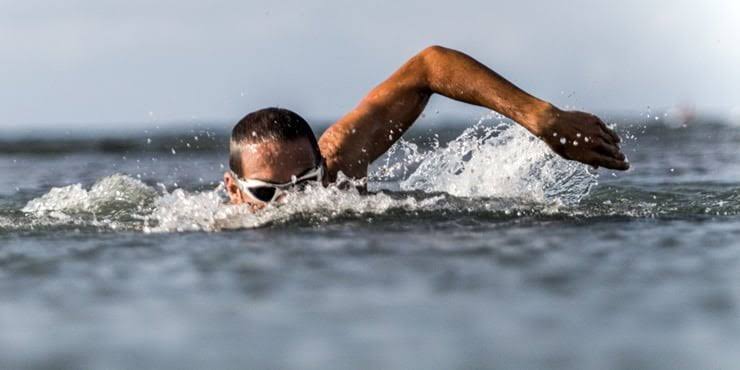
Swimming is a technical skill as much as it is an endurance sport. Improving your stroke, breathing, body position and efficiency can make a huge difference to how comfortable you feel in the water.
A beginner triathlete who is already a confident runner might be tempted to spend most of their training time running.
That feels logical.
It is also an easy way to create a giant hole in your preparation.
If swimming is your weakest discipline, give it more attention.
And if you’re preparing for an open-water triathlon, getting comfortable swimming in open water can be particularly valuable.
Cycling and Running Need to Work Together
One of the biggest differences between standalone running and triathlon training is what happens before your run.
In a normal run, you start running.
In a triathlon, you swim first and cycle before you run.
Congratulations.
Your legs have entered the chat already tired.
That’s why brick workouts are useful.
A brick session combines two disciplines, most commonly cycling followed by running.
The purpose isn’t simply to make your workout harder. It helps you become familiar with the sensation of moving from one discipline to another.
That first few minutes of running after a bike can feel... weird.
Your legs may feel heavy.
Your stride can feel unfamiliar.
Your brain may briefly wonder why you voluntarily signed up for this.
Practising it makes race day less of a surprise.
You Don’t Need to Train Hard Every Day
This is where self-coached athletes can sometimes get themselves into trouble.
You have three sports.
You’re excited.
You have a new training plan.
Suddenly you’re swimming before work, cycling after work and running because apparently sleep is optional now.
It isn’t.
Recovery is part of triathlon training.
Your body still needs time to adapt to the workload, and stacking hard sessions together without enough recovery can leave you constantly tired.
A good training week should have a balance between easier sessions, harder sessions, longer endurance work and recovery.
You’re trying to build fitness, not collect exhaustion.
Strength Training Still Has a Place
Triathletes sometimes think their training has to consist entirely of swimming, cycling and running.
It doesn’t.
Strength training can complement endurance training by helping develop overall strength and supporting the physical demands of training.
You don't need to spend hours lifting weights.
A sensible strength routine can be built around movements that support your overall athletic development, with the exact approach depending on your experience, goals and training load.
Think of it as supporting the three main characters rather than introducing a completely unnecessary fourth sport.
Nutrition and Recovery Become More Important
When you train for three disciplines, your total workload can climb quickly.
That means recovery deserves attention.
Sleep.
Food.
Hydration.
Rest days.
All the boring things that suddenly become extremely important when your training volume increases.
As your sessions get longer, understanding how to fuel and hydrate during training becomes useful too.
And, just like your workouts, race-day nutrition should be practised rather than invented on race morning.
Your first ever energy gel should probably not be consumed while standing at the start line wondering what this sticky little packet is about to do to your life.
Where Does a Triathlon Training Plan Help?
A structured triathlon training plan gives your week some logic.
Instead of randomly squeezing swimming, cycling and running into whatever gaps you find, you can organise your training around progression, recovery and your race date.
It can help answer questions such as:
When should I do my long ride?
How often should I swim?
When should I run?
Where do brick sessions fit?
When should I recover?
How do I build towards race distance without doing too much too soon?
That structure becomes even more useful when you're balancing training with work, family, travel and everything else that exists outside the glorious little bubble of endurance sports.
A training plan won't make the race easy.
It can, however, make the road to the race considerably less chaotic.
When Should You Consider a Triathlon Coach?
This is where coaching can become valuable.
You may want a coach if you’re completely new to triathlon, unsure how to structure three disciplines, preparing for a challenging event, struggling to balance training with your lifestyle or simply want someone experienced to guide your progression.
A coach can do more than hand you workouts.
They can help adjust training based on how you’re responding, your schedule, your strengths and weaknesses, and your race goals.
That personalised feedback can be particularly useful when you're juggling three sports instead of one.
And if swimming technique is a major weakness, getting hands-on guidance from an experienced swim or triathlon coach can be especially useful.
You don't necessarily need a coach.
But sometimes paying for guidance is easier than spending months figuring everything out through trial and error.
The Best Approach Depends on You
There is no universal rule saying every triathlete needs a coach.
If you’re experienced, disciplined, comfortable learning and racing a manageable distance, self-coached triathlon training can absolutely be an option.
If you’re new to endurance sports, have a demanding schedule, are aiming for a specific performance goal or simply want more accountability, coaching may make your journey smoother.
And there’s a middle ground too.
You can follow a structured training plan, join training sessions or camps, learn from experienced athletes and use coaching support when you need it.
Training doesn’t have to be all-or-nothing.
So, Should You Train for a Triathlon Without a Coach?
Yes.
But don’t confuse independent training with random training.
If you’re going to train without a coach, educate yourself. Understand the demands of your race. Build your swimming, cycling and running progressively. Include recovery. Practice transitions. Learn how to fuel. And, most importantly, follow a structure that makes sense.
If you want more guidance without necessarily committing to one-to-one coaching, Next Lap provides training plans and training camps that can help athletes prepare with more structure, expert guidance and a community around them.
And once the training starts looking less terrifying, there’s only one thing left to do.
Find the race.
Pick your start line.
And let the swim-bike-run chaos begin.
Because your first triathlon isn't supposed to prove that you're already a triathlete.
It's supposed to be the thing that turns you into one.
Team Next Lap
Contributing author at Next Lap